
Find Who Owns a Brown County Property
The cleanest route runs address to parcel, parcel to owner field, and owner field to the latest deed. Brown County links its Assessor to WTH GIS. The Recorder links Doxpop for recorded land instruments. Use the first system to name a candidate owner and the second to confirm the most recent grantee.
- Search the address in Brown County WTH GIS and select the matching parcel.
- Read Owner, Property Address, Owner Address, and both parcel-number fields.
- Search the candidate owner in Doxpop Recorder and identify the newest deed for that legal description.
- If an LLC owns it, use Indiana's business search to identify the entity record and registered agent.
It answers who owns the parcel in public records. It does not reveal every person who occupies, manages, inherits, or claims an interest in the property.
Read Brown County's WTH Owner Field
The WTH result is unusually generous with detail. It places Owner, Property Address, and Owner Address beside both a state parcel number and a county parcel number. One sample read "SMITH,RANDE WAYNE & (SMITH,KATHRYN E)." The property and owner addresses sat at 375 Artist Drive, with distinct state and county parcel keys.
| Displayed item | How to read it |
|---|---|
| Owner | The assessment roll's owner-of-record text, including co-owner or entity wording |
| Property Address | The situs associated with the parcel |
| Owner Address | The destination used for owner mail, which can be elsewhere |
| State parcel number | A state-format identifier to preserve exactly |
| County parcel number | The full hyphenated local identifier, including its suffix |
The WTH parcel search is shown below.
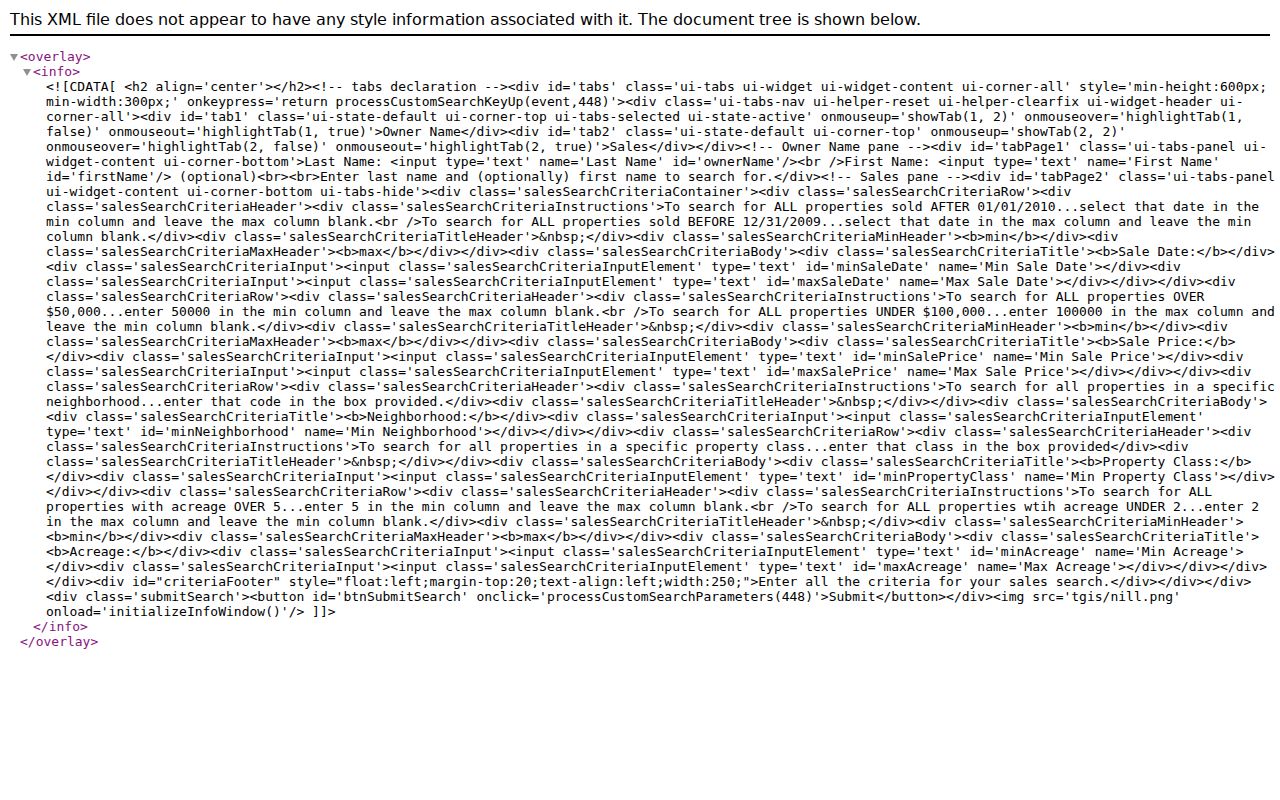
The owner and sales tabs are only the start. Whenever ownership truly matters, the result still needs confirmation from the recorded deed.
Brown County Owner Names Have Local Search Quirks
Brown County results carry quirks that can break an exact name search. You will see revocable-trust abbreviations, trustee text, "JTW/RIGHTS OF," "ETAL," and C/O forms. Any of these strings can make a query miss. The custom Owner tab requires Last Name and treats First Name as optional. Start with the stable surname or entity fragment. Add more text only after that first pass. "ETAL" means more parties may exist. C/O text usually marks a mailing relationship rather than the situs, joint-tenancy wording can point to more than one interest, and a trust name may identify the trust instead of its beneficiaries, so copy the result exactly before simplifying a name for the deed index.
Note: A broad surname search can reveal spelling and co-owner variants that an exact full-name query hides.
Confirm the Brown County Property Owner by Deed
An assessment roll is an administrative snapshot. Brown County publishes no fixed deed-to-roll refresh interval, so no nightly or monthly claim is safe. A recent deed can reach the Recorder first. WTH may lag behind the new owner. Search the newest deed by grantee name, date, legal description, parcel clue, or instrument reference. Then compare grantor, grantee, and land description against the subject parcel. Doxpop's Brown County index and scanned images begin in July 1988. That coverage usually reaches the recent transfer. The index supplies no title opinion, though. The Recorder counter, phone, and mail routes still work when an image or online query fails, and the staff can explain current copy and certification rules for documentary proof. The Brown County current owner guide explains the present-tense fields in full. This method uses them only as its first stage.
Identify a Brown County LLC or Trust Owner
When WTH names a company, the parcel is held in that entity name, not in the names of everyone behind it. The Indiana Secretary of State business search offers Contains, Starts With, and Exact Match modes, and results can include business name, business ID, filing number, registered agent, governing person, status, and addresses. A business record explains the entity. It shows the service contact, but it never replaces the deed. Trusts need more care. Public text may show a trustee or an abbreviated trust name. Private trust terms stay hidden. Estate ownership may call for a probate case. It can also involve a transfer-on-death deed, survivorship affidavit, a personal representative's deed, or another recorded instrument.
Where Brown County Property Ownership Appears
No one source answers every sense of "who owns." The assessor roll is fast and parcel-centered. The Recorder supplies recorded transfer evidence, GIS adds geography, and entity or court records explain special ownership forms.
| Source | Owner Info It Gives | Access |
|---|---|---|
| WTH assessor/GIS | Owner, situs, mailing address, and parcel keys | Public web viewer or Assessor |
| Recorder/Doxpop | Newest deed's grantee and recorded description | Online from July 1988; counter, phone, or mail |
| Indiana business search | Entity status, registered agent, and filed business details | State online search |
| Clerk/MyCase | Probate, foreclosure, quiet-title, or partition case context | Online public case data or Clerk file |
The owner of record and the occupant can differ. Land may sit vacant, leased, seasonal, or entity-held. Mail may route through another address entirely, so public ownership data never tells you who is physically present.
Ask Brown County Offices When Online Search Fails
The Assessor, Mari H. Miller, sits at 201 Locust Lane, first floor, Nashville, reachable at 812-988-5466 and assessor@browncounty-in.gov. The Recorder, Mary E. Smith, works in the same building at 812-988-5462 and recorder@browncounty-in.gov. Ask the Assessor about the owner field and card. Ask the Recorder for the latest deed or instrument. Both offices take in-person and phone questions. Record copies can also be requested by mail. Under Indiana APRA, IC 5-14-3, inspection of available public records is generally free. A verbal request should draw a response within 24 hours. A written request gets seven calendar days. Production can take longer based on age, volume, review, and redaction. Have the parcel number, exact address, owner text, instrument number, and date range ready.
Cross-Check a Brown County Ownership Answer
Tax and planning files corroborate ownership; they rarely prove it. A Treasurer tax bill can point to whoever receives the mail. Planning papers may tie an applicant to a site. A sales disclosure adds a transfer date and price. But IC 6-1.1-5.5-3(d) bars phone numbers from those records. Court files can explain a title fight or an estate transfer.
Suppose a deed description and a parcel card disagree. Then reach for the recorded plat. The Surveyor's legal survey books, grant books, section corners, and historic maps help too. For older ownership chains, take the separate Brown County former owners route through deed books and microfilm. Do not stretch this current method backward.
What a Brown County Owner Lookup Cannot Prove
A property search has firm limits. It can name the public owner of record and a recorded grantee. It cannot prove marketable title. It cannot settle competing claims, reveal private trust terms, or confirm who lives at an address. Indiana's Address Confidentiality Program can substitute an address for a qualifying participant. Voter confidentiality rules also shield participating voters. Even so, those measures do not make every underlying property record private.
- Owner of record
- The name carried on the current administrative or recorded source.
- Grantee
- The party receiving an interest in a recorded deed.
- Title
- The legal ownership interests and claims, which require more than one portal result to evaluate.
- Situs address
- The property's location, distinct from the owner's mailing address.
Owner name is not title proof. Use Brown County owner data for lawful property research and due diligence. Never use it to harass, intimidate, or harm anyone.